
Red-tailed Hawk
Chicken Hawk, Red-tail · Buteo jamaicensis
By the Birdfact teamChecked by Nathan Cope
See it in 3D
2 plumages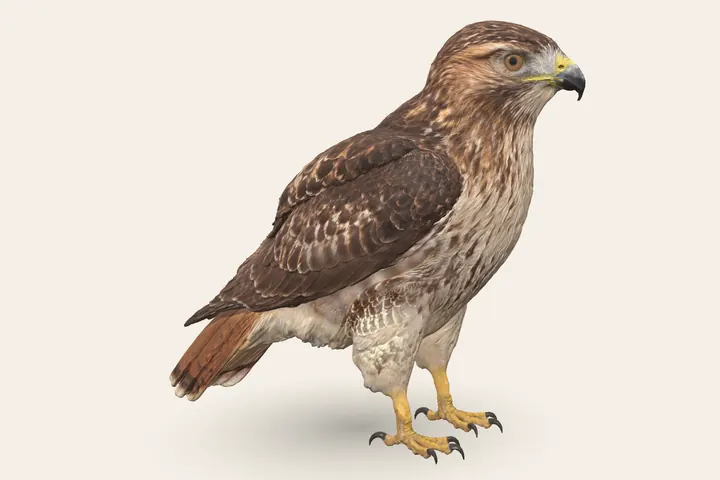 3D model
An adult Red-tailed Hawk is 17.5–25.5 in (45–65 cm) long, bill to tail.
3D model · Adult · Length 17.5–25.5 in (45–65 cm) · How we make our birds · Report a problem
© 2026 NC Digital Limited (Birdfact). All rights reserved. This 3D model may be viewed on this page and shared by link only. Downloading, extracting, copying or reusing it, or using it to train machine-learning models, is not permitted without our written permission. Using our models
On this page13 sections
How to recognise it
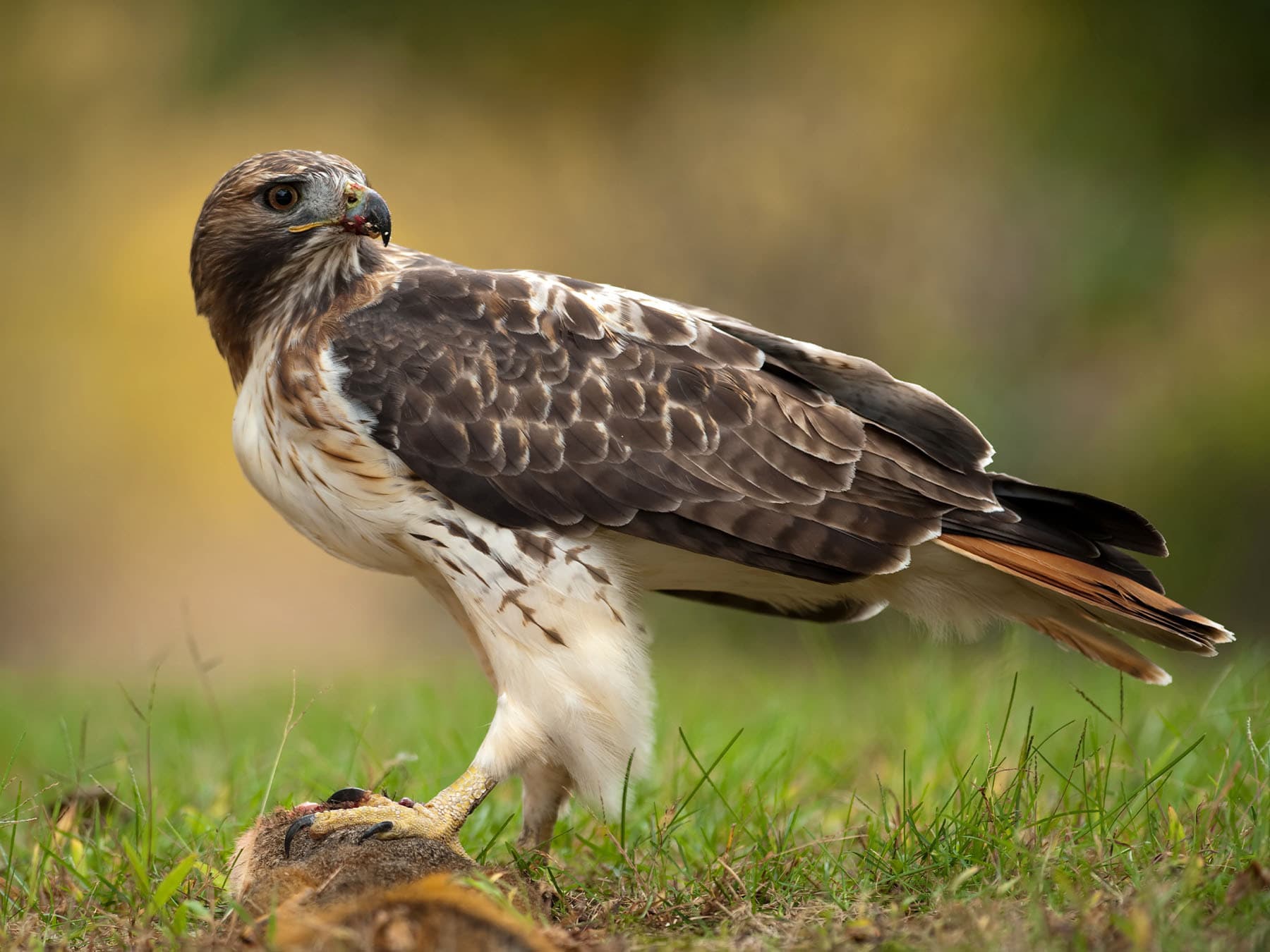
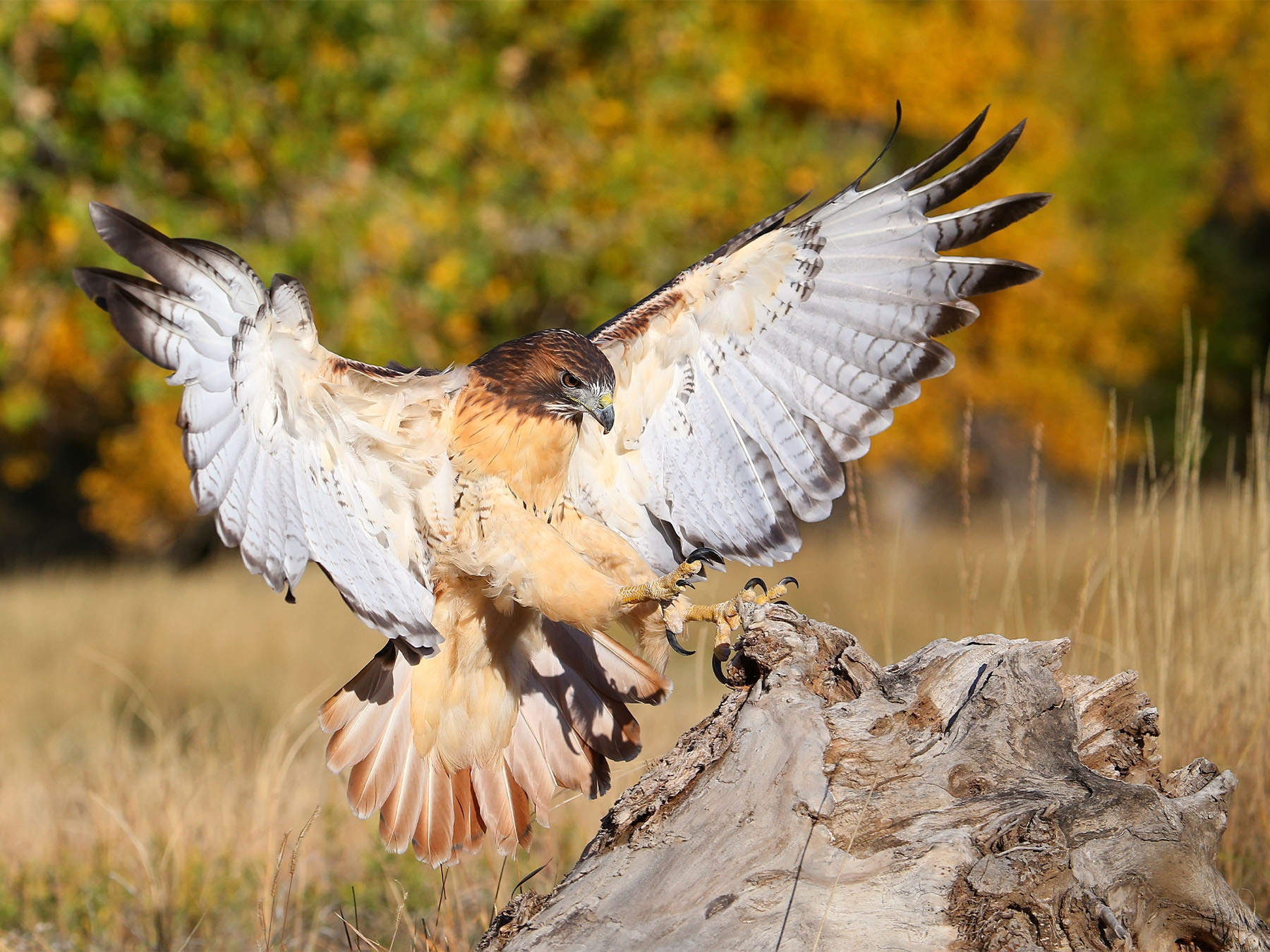
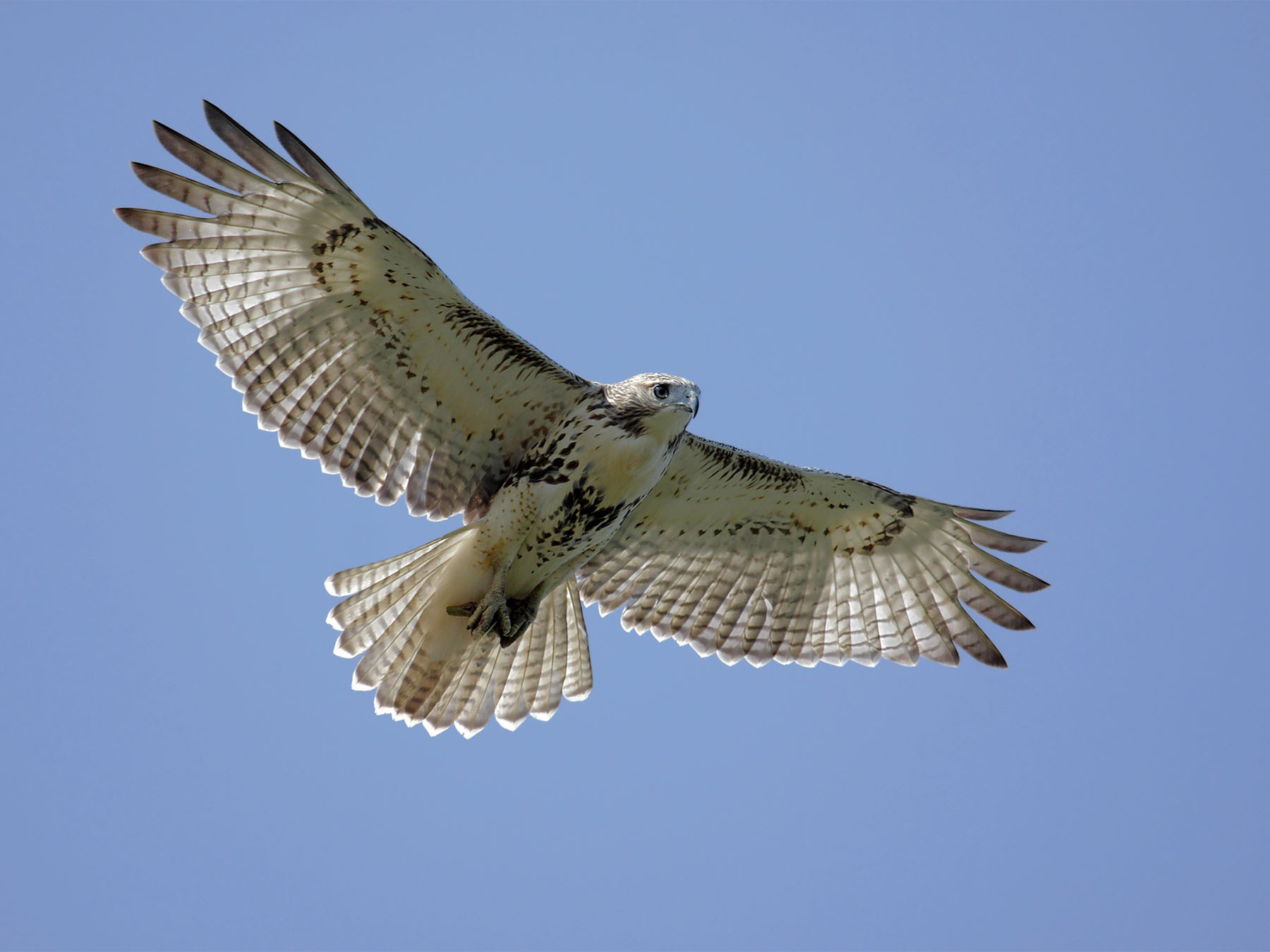
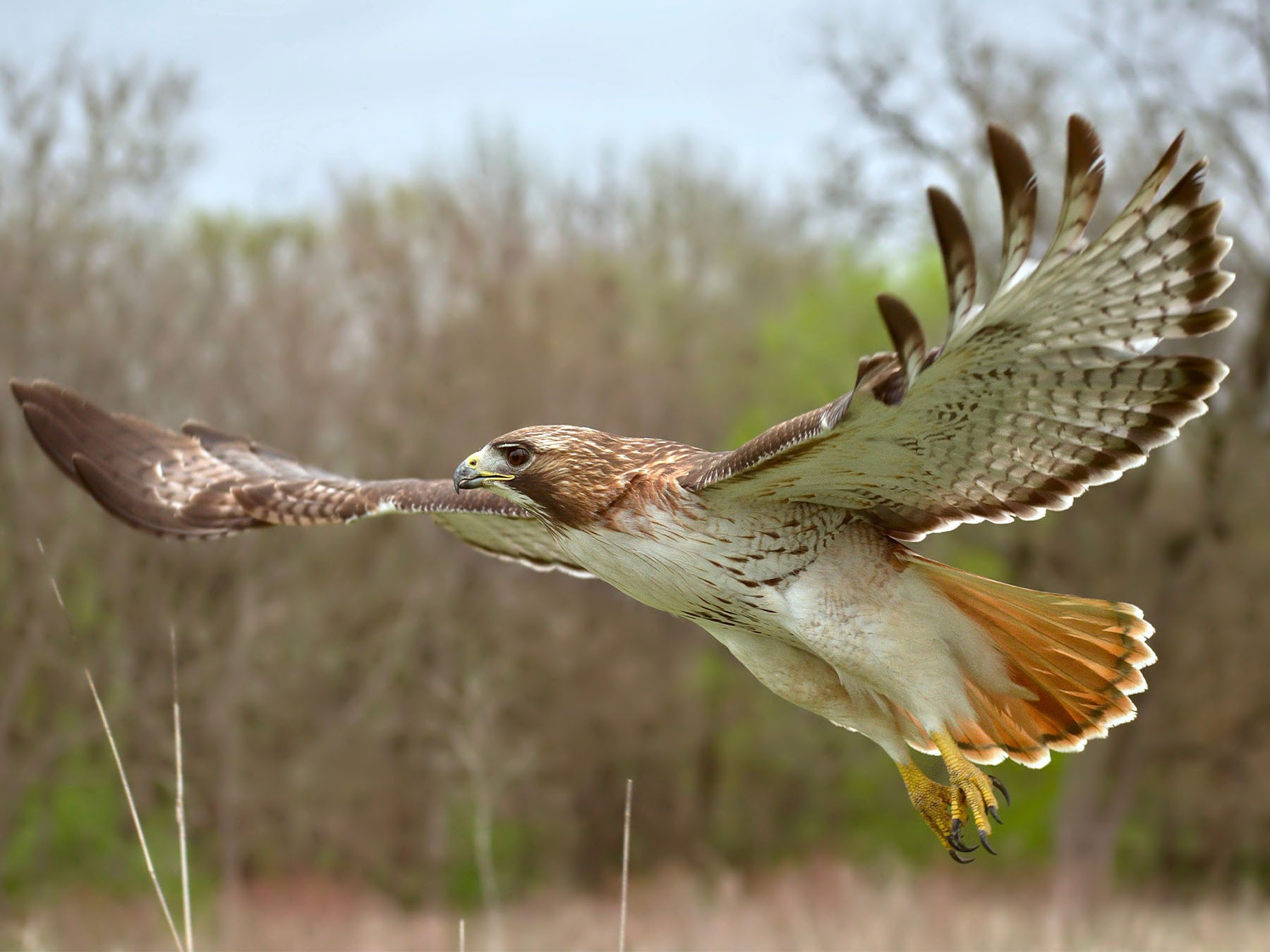
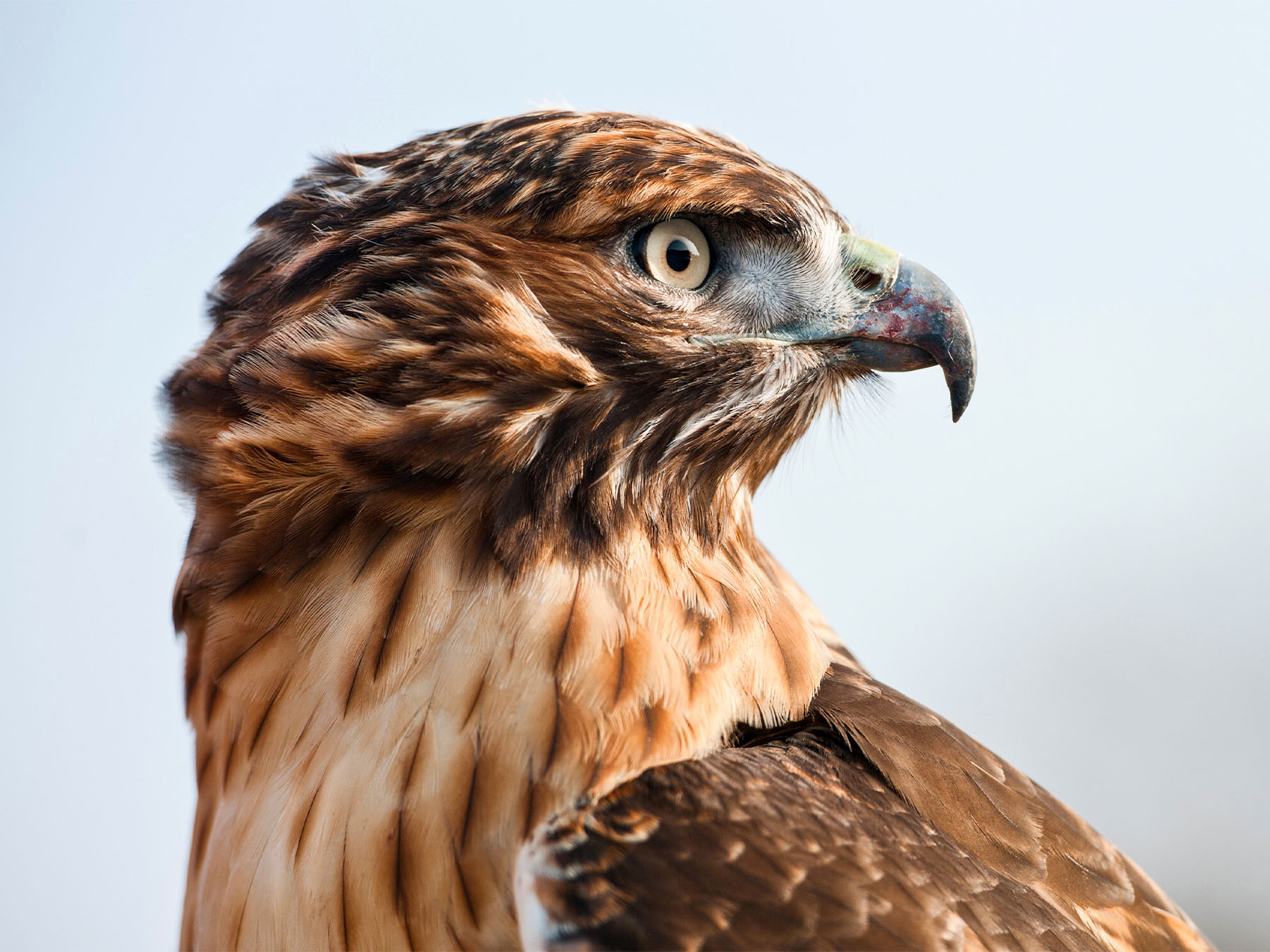
The Red-tailed Hawk is a robust raptor with broad, rounded wings and a short, wide tail. Its upperparts are dark brown, while the underparts are pale with a streaked belly band. The namesake red tail is visible in adults, appearing brick-red above.
Females are typically 25% larger than males but share similar plumage. Juveniles lack the red tail, instead showing a brown tail with narrow dark bands. Regional color variations exist, ranging from light to dark morphs.
Not sure it’s a Red-tailed Hawk? Check your photo: Birdfact names the bird and shows the look-alike side by side.
Its size
Adults- Length
- 45–65 cm
- Wingspan
- 110–141 cm
- Weight
- 690–1460 g
Its song and calls
The Red-tailed Hawk's call is a distinctive, hoarse scream described as 'kee-eeeee-arr,' often lasting 2-3 seconds. This vocalization is so iconic that it's frequently used in movies to represent eagles or other raptors.
During courtship, pairs may call together with a series of raspy cries.
- Call0:00 / 0:04
Recorded in California, United States · February 2021
Heard one and not sure? Let the bird song identifier listen.
When and where to see it
OctoberArriving
Most recorded in October
- 1. North Dakota2.6%
- 2. Idaho2.4%
- 3. Colorado2.3%
- 4. Nebraska2.2%
- 5. South Dakota2.1%
Each dot is a county, state or province: the bigger and darker, the larger the bird’s share of that place’s bird records that month. Grey dots: no regular records. The ringed point is the centre of the bird’s records this month; the arrow shows how it moved since last month, and the dashed loop its path through the year. “Arrivals” colours places where it becomes regular this month (orange) or is in its last regular month (grey). GBIF eBird Observation Dataset, 2019–2024. Map data: Natural Earth, US Census Bureau; place centres © OpenStreetMap contributors.
In your area
See when the Red-tailed Hawk is recorded in your county, state or province.
How often the Red-tailed Hawk turns up in the United States and Canada through the year, from birdwatchers' records.
United States
Resident · all year · most records in January
Canada
Resident · all year · most records in January
Show as a table
| Month | United States | Canada |
|---|---|---|
| January | 1.5% (regular) | 1.2% (regular) |
| February | 1.4% (regular) | 1.1% (regular) |
| March | 1.2% (regular) | 0.89% (regular) |
| April | 0.83% (regular) | 0.65% (regular) |
| May | 0.64% (regular) | 0.35% (regular) |
| June | 0.65% (regular) | 0.34% (regular) |
| July | 0.71% (regular) | 0.38% (regular) |
| August | 0.82% (regular) | 0.42% (regular) |
| September | 0.85% (regular) | 0.52% (regular) |
| October | 1.0% (regular) | 0.72% (regular) |
| November | 1.3% (regular) | 0.92% (regular) |
| December | 1.4% (regular) | 1.1% (regular) |
Worldwide: recorded regularly in 20 countries
Countries where it was recorded in at least 3 of the 6 years 2019–2024. Linked countries have their own bird list.
North America (20)
- Bahamas
- Belize
- British Virgin Islands
- Canada
- Caribbean Netherlands
- Costa Rica
- Cuba
- Dominican Republic
- El Salvador
- Guatemala
- Haiti
- Honduras
- Jamaica
- Mexico
- Nicaragua
- Panama
- Puerto Rico
- St Kitts & Nevis
- United States
- US Virgin Islands
Data: EOD – eBird Observation Dataset (Cornell Lab of Ornithology), accessed via GBIF.org, CC BY 4.0. Records from 2019–2024, aggregated and filtered by Birdfact. How these lists are made
Tips for seeing it
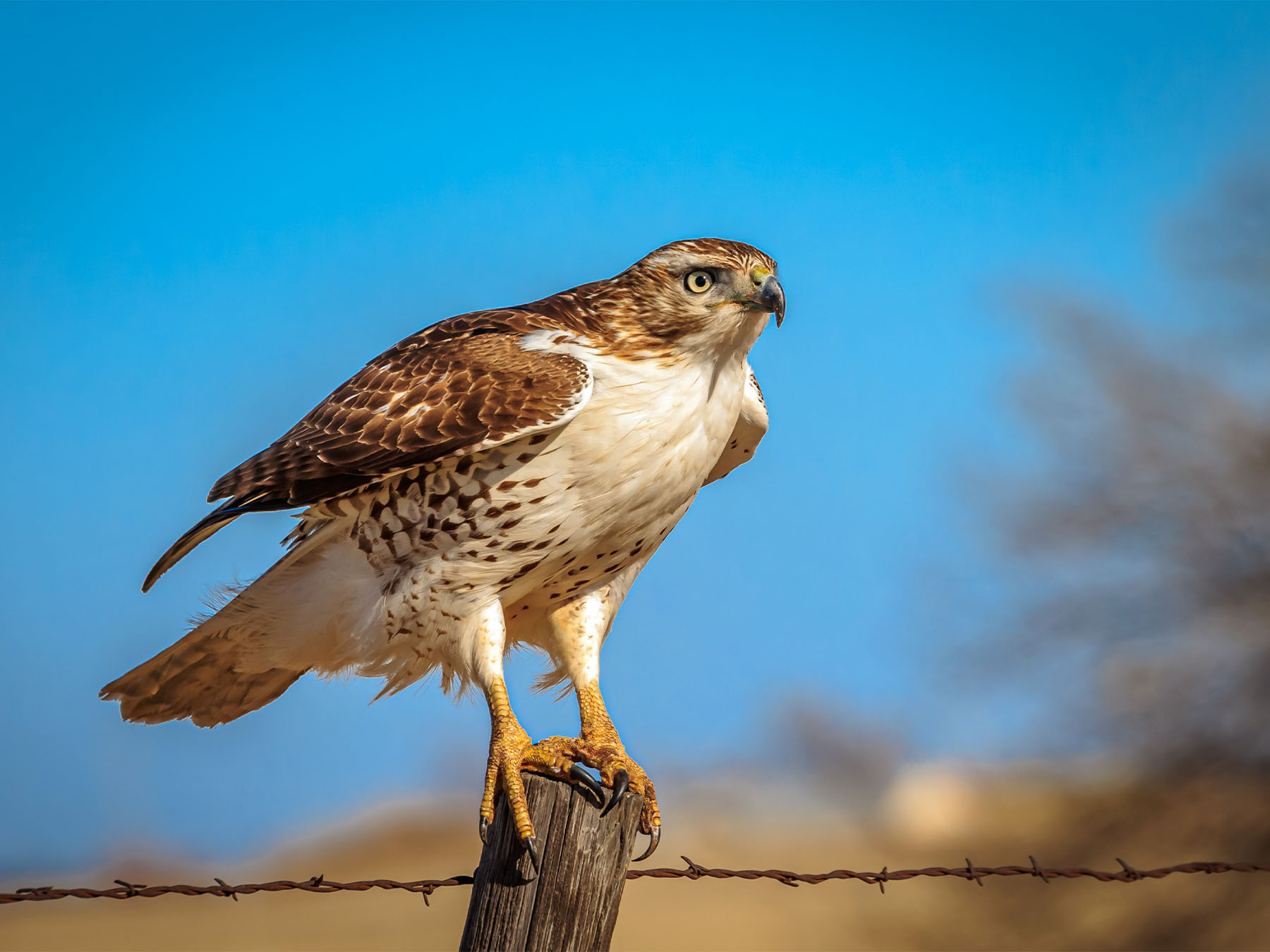
- Look for Red-tailed Hawks perched on poles, trees, or soaring over open areas
- Observe the distinctive red tail of adults when they're in flight
- Listen for their raspy, screaming 'kee-eeeee-arr' call
- In North America, scan roadsides in rural areas for perched individuals
What it eats
Red-tailed Hawks are versatile predators, primarily feeding on small to medium-sized mammals such as rabbits, squirrels, and rodents. They also consume birds, reptiles, and occasionally insects.
These hawks employ a 'sit-and-wait' hunting strategy, swooping down on prey from elevated perches.
Nesting and breeding
Red-tailed Hawks typically form monogamous pairs that may mate for life. Breeding season varies by region but generally occurs from March to May in North America.
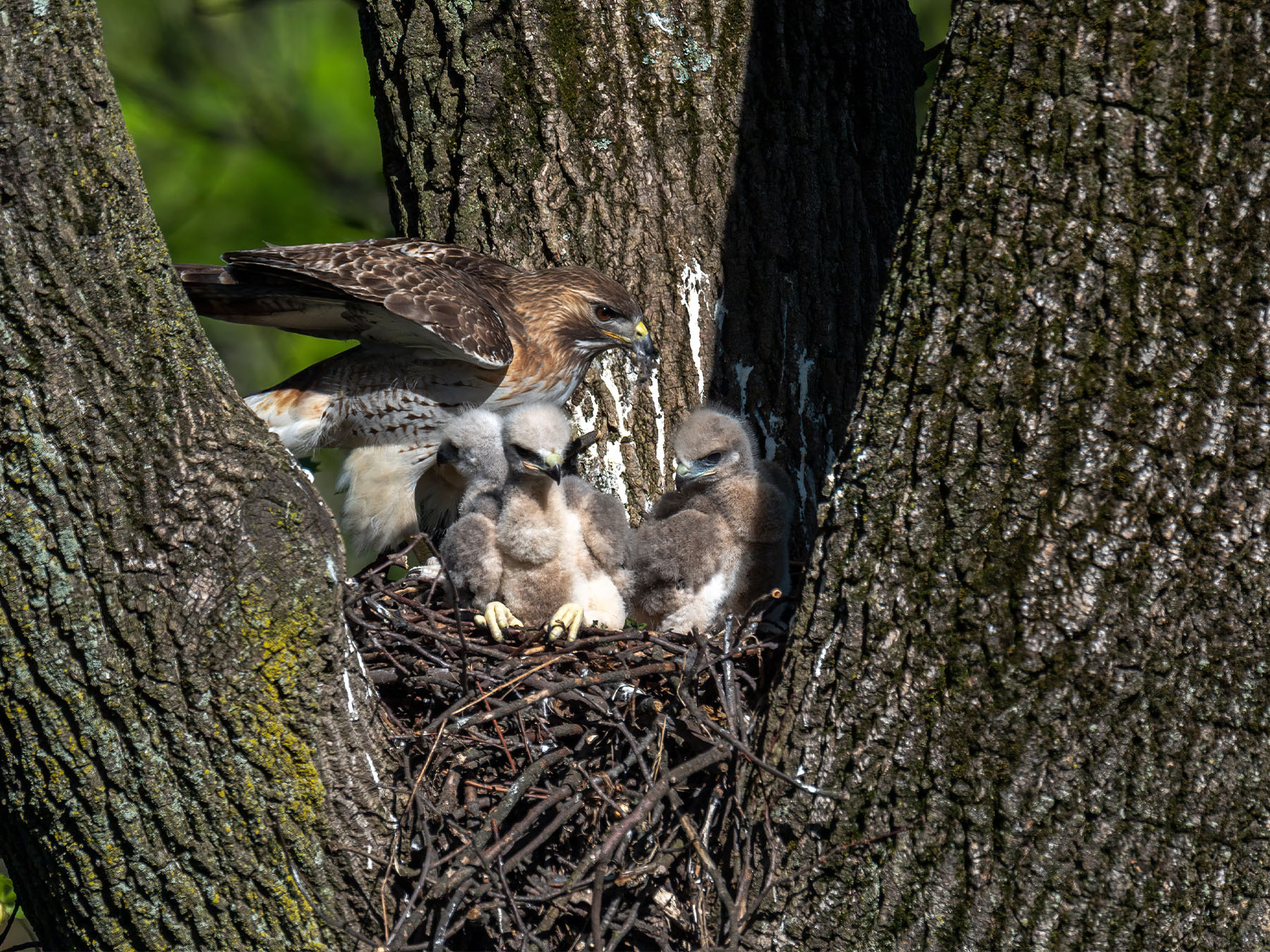
Nests are large structures of sticks lined with bark strips, fresh foliage, and dry vegetation. They are usually placed high in a tree or on a cliff ledge. Females lay 2-3 eggs, which are white or pale blue with brown spots.
Incubation lasts about 28-35 days, primarily done by the female. Nestlings fledge after 42-46 days but remain dependent on their parents for several weeks after leaving the nest.
Behaviour
Red-tailed Hawks are often seen perched on tall structures or soaring in wide circles high above open fields. They use their keen eyesight to spot prey from these vantage points.
During courtship, pairs perform impressive aerial displays, sometimes locking talons mid-flight and spiraling towards the ground.
Conservation
Red-tailed Hawks are currently listed as Least Concern due to their large range and stable population. However, they face threats from habitat loss, collisions with vehicles and structures, and secondary poisoning from rodenticides.
Conservation efforts focus on protecting nesting sites and reducing the use of harmful pesticides.
More photos
7 photos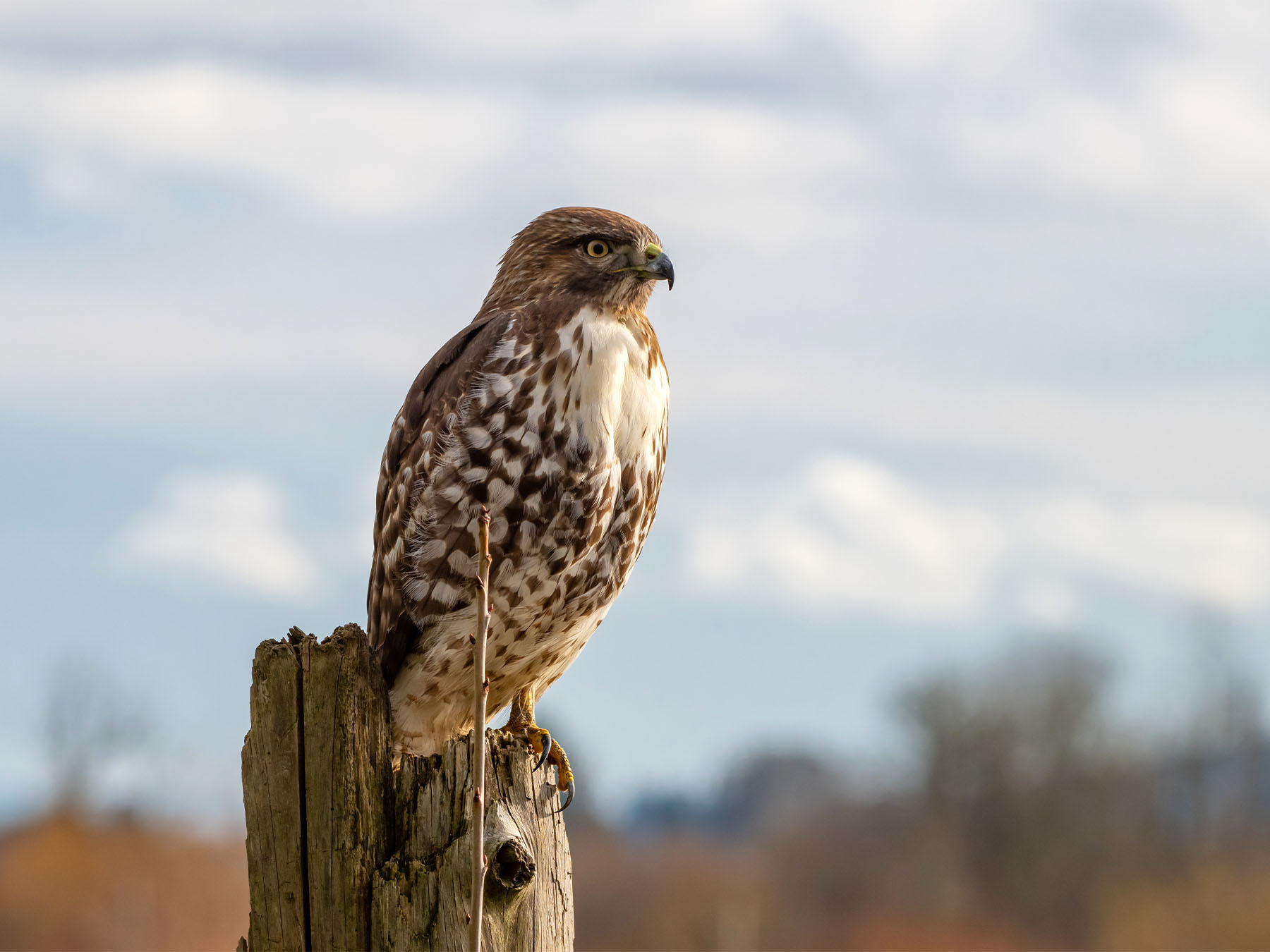
Red-tailed Hawk guides
6 guides- Red-tailed Hawk Nesting (Complete Guide)
- Juvenile Red-tailed Hawks (Identification Guide with Pictures)
- Red-tailed Hawk vs Red-shouldered Hawk: What Are The Differences?
- Female Red-tailed Hawks (Identification Guide)
- How Long Do Red-Tailed Hawks Live? (Red-tailed Hawk Lifespan)
- Red-tailed Hawk Migration: A Complete Guide
Quick facts
- Length
- 45–65 cm
- Wingspan
- 110–141 cm
- Weight
- 690–1460 g
- Lifespan
- 10–15 years · oldest recorded 30.7 years
- Family
- Hawks & Eagles
- Migration
- Partial migrant
- Global status (IUCN)
- Least Concern
- World population
- 3,100,000 mature individuals
- Population trend
- Population increasing due to adaptability to human-altered habitats
- Also called
- Chicken Hawk, Red-tail
- Scientific name
- Buteo jamaicensis
Sources
4- 1BirdLife International. 2016. Buteo jamaicensis. The IUCN Red List of Threatened Species 2016: e.T22695933A93534834. Source (opens in a new tab)
- 2Breeding Bird Survey and/or Christmas Bird Count: Butcher and Niven (2007)
- 3Partners in Flight (2022) Source (opens in a new tab)
- 4Longevity Records Of North American Birds. Version 2023.1 Source (opens in a new tab)

Checked by
Nathan Cope, founder and editor
Nathan founded Birdfact and leads its writers and contributors in the UK, the US and Canada. He has watched and studied birds for more than ten years, and checks every article and species guide before it’s published.