
Killdeer
Charadrius vociferus
By the Birdfact teamChecked by Nathan Cope
See it in 3D
2 plumages
An adult Killdeer is 8–11 in (20–28 cm) long, bill to tail.
Adult
© 2026 NC Digital Limited (Birdfact). All rights reserved. This 3D model may be viewed on this page and shared by link only. Downloading, extracting, copying or reusing it, or using it to train machine-learning models, is not permitted without our written permission. Using our models
On this page15 sections
How to recognise it
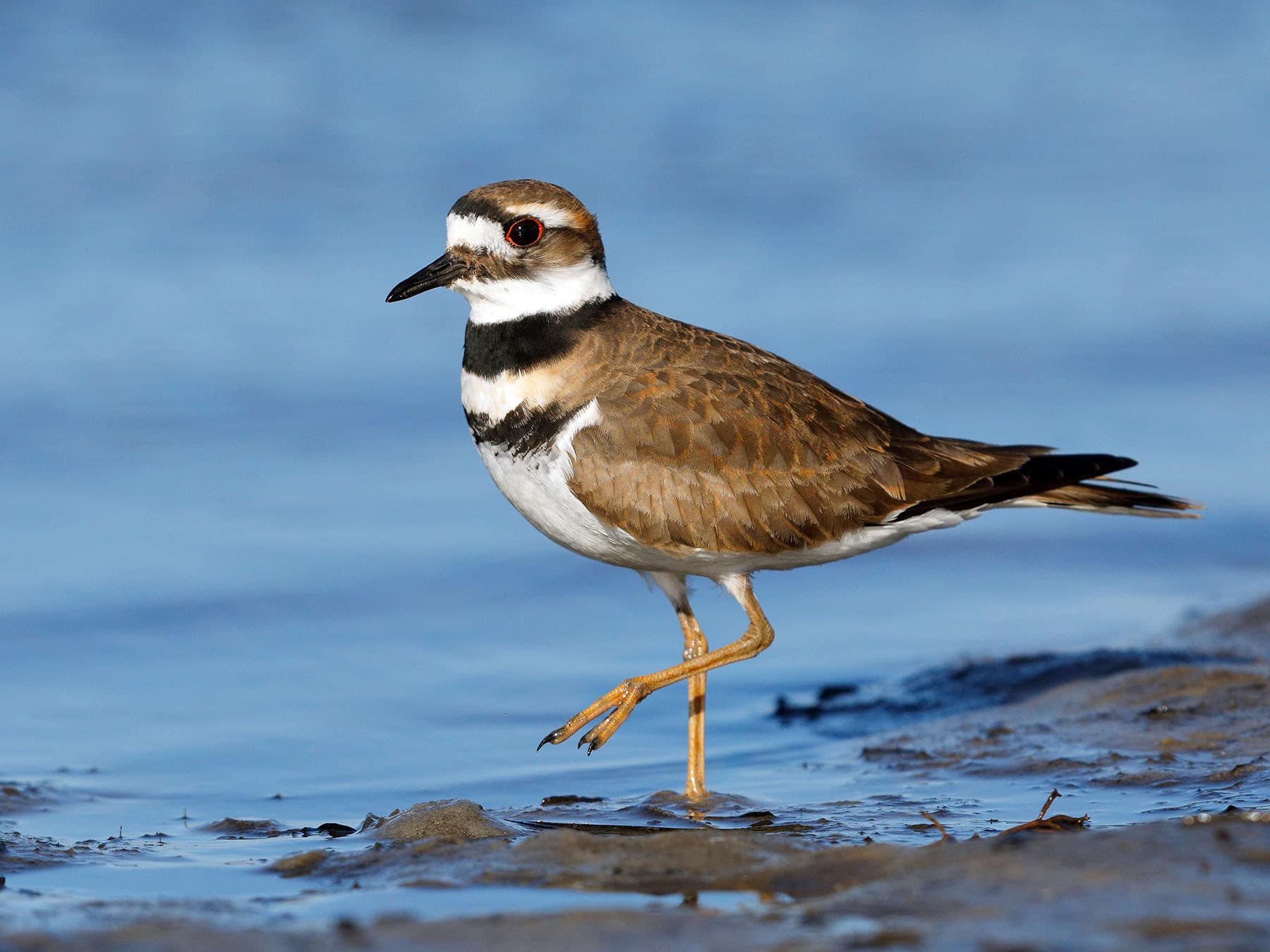
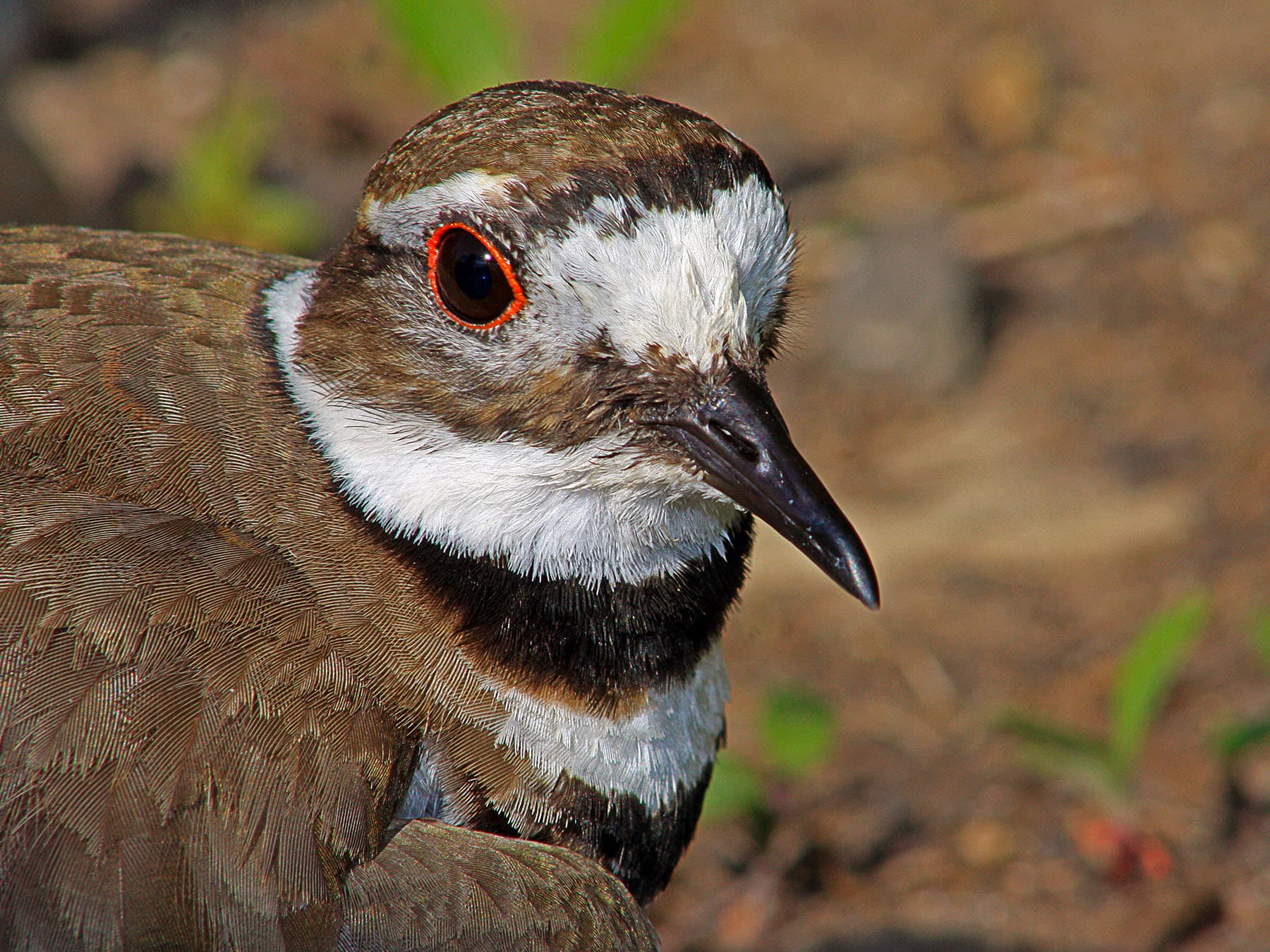
You don't need a beach to find this plover. The Killdeer is a slim, long-legged shorebird, brown above and white below, with two black bands across its breast. No other North American ringed plover has two; the others have one. A red ring of bare skin circles its big dark eye, and its face is boldly patterned, with a white forehead and eyebrow and a black bar across the forecrown, and black running from the base of the bill to the eye and on beneath it.
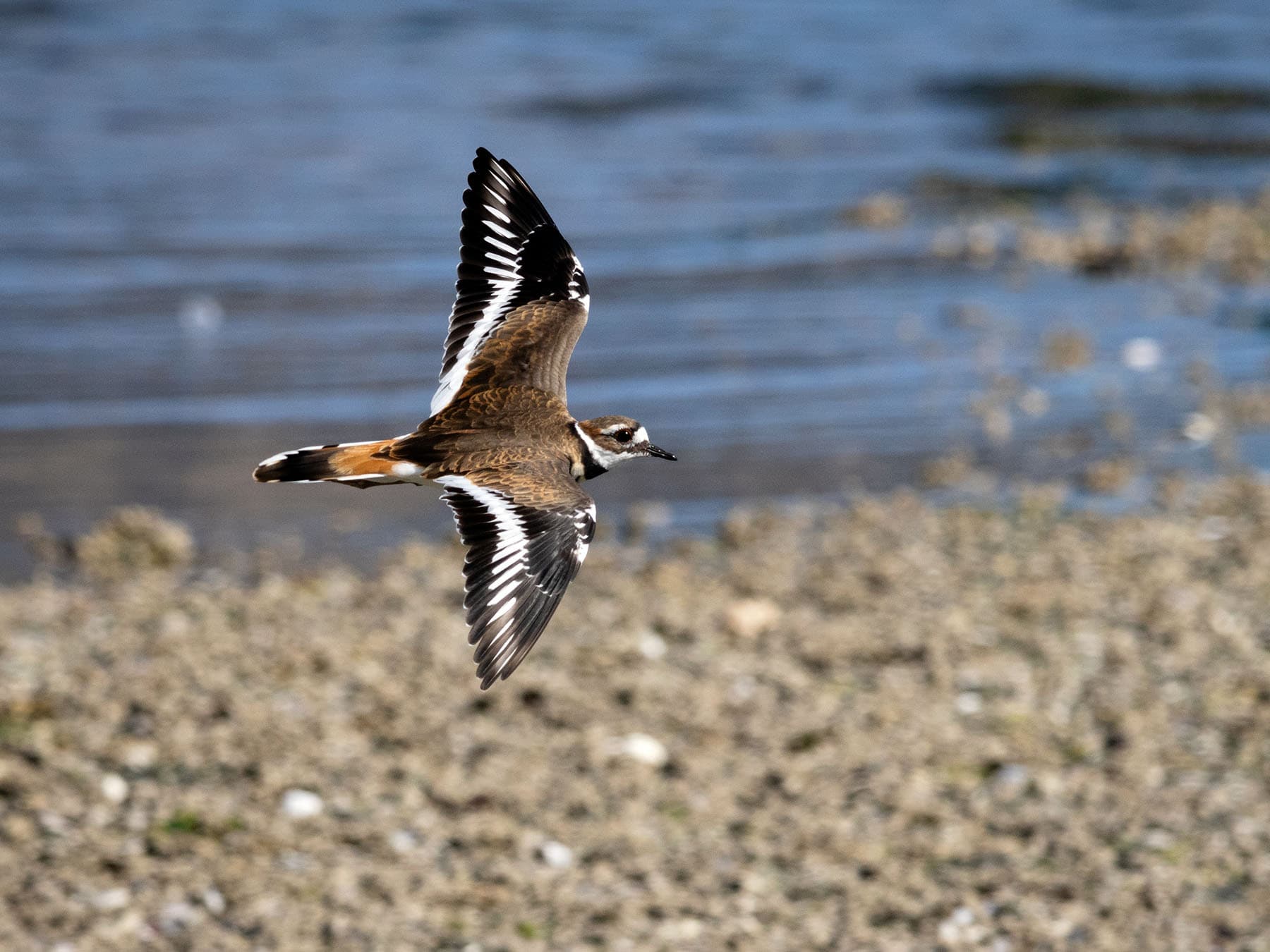
When it flies, or fans its tail in display, it shows a bright orange-buff rump and a long tail with a black band near the white-edged tip. It looks much the same all year: in fall, fresh feathers have cinnamon edges, and the lower breast band can look partly hidden by white fringes.
Size and shape
Killdeer are 8 to 11 inches (20-28 cm) long and weigh 2.6 to 4.5 ounces (75-128 g).1 That makes them about the size of an American Robin, though longer in the leg and wing, and bigger than the other ringed plovers they live alongside.
Like other plovers it has a big rounded head, large eyes and a short bill, but it is slimmer and lankier than most, with long, pointed wings and a long tail. Its legs are pinkish to gray or gray-green, and it has no hind toe.
Males, females and young
Males and females look alike. Males may average a little more rufous on the back and more black on the face, and the red eye-ring of a female is often paler and more orange, but the differences are slight and vary, and are usually only seen when a pair stands side by side. Some pairs show no difference at all.
Downy chicks have only one black band across the breast and no orange rump, and they run about on long legs with a long, fluffy tail. The bare skin around a chick's eye starts yellowish gray and turns through green and gold to red by the time it is independent. By about 17 days old most of the down has been replaced. Juveniles look like adults, but with buffy to pale rusty edges on the back and wing feathers, and bits of chick down often cling to the tail tips for weeks or months.

Identification in flight
A flying Killdeer is fast and strong on long, pointed wings, with stiff wingbeats. Look for the orange rump and tail and a bold white stripe along the open wing. Disturbed birds often circle overhead calling, and a Killdeer circling on stiff wings can pass for an American Kestrel, at least until it comes down and starts running.
Identification: similar birds
Semipalmated Plover. Smaller, 7 to 8 inches (17-20 cm), with a single breast band, usually orange legs and no orange rump. Downy Killdeer chicks also have one band, so they can be taken for a Semipalmated at a distance, but they are darker brown and plainly downy, not sleek.
Piping Plover. Much smaller, 6 to 7 inches (15-18 cm), and as pale as dry sand above, with orange legs, a stubby bill and, in summer, one breast band that may be broken.
Wilson's Plover. Smaller, 7 to 8 inches (18-20 cm). Its large black bill is the best mark; it also has dull legs and one wide breast band.
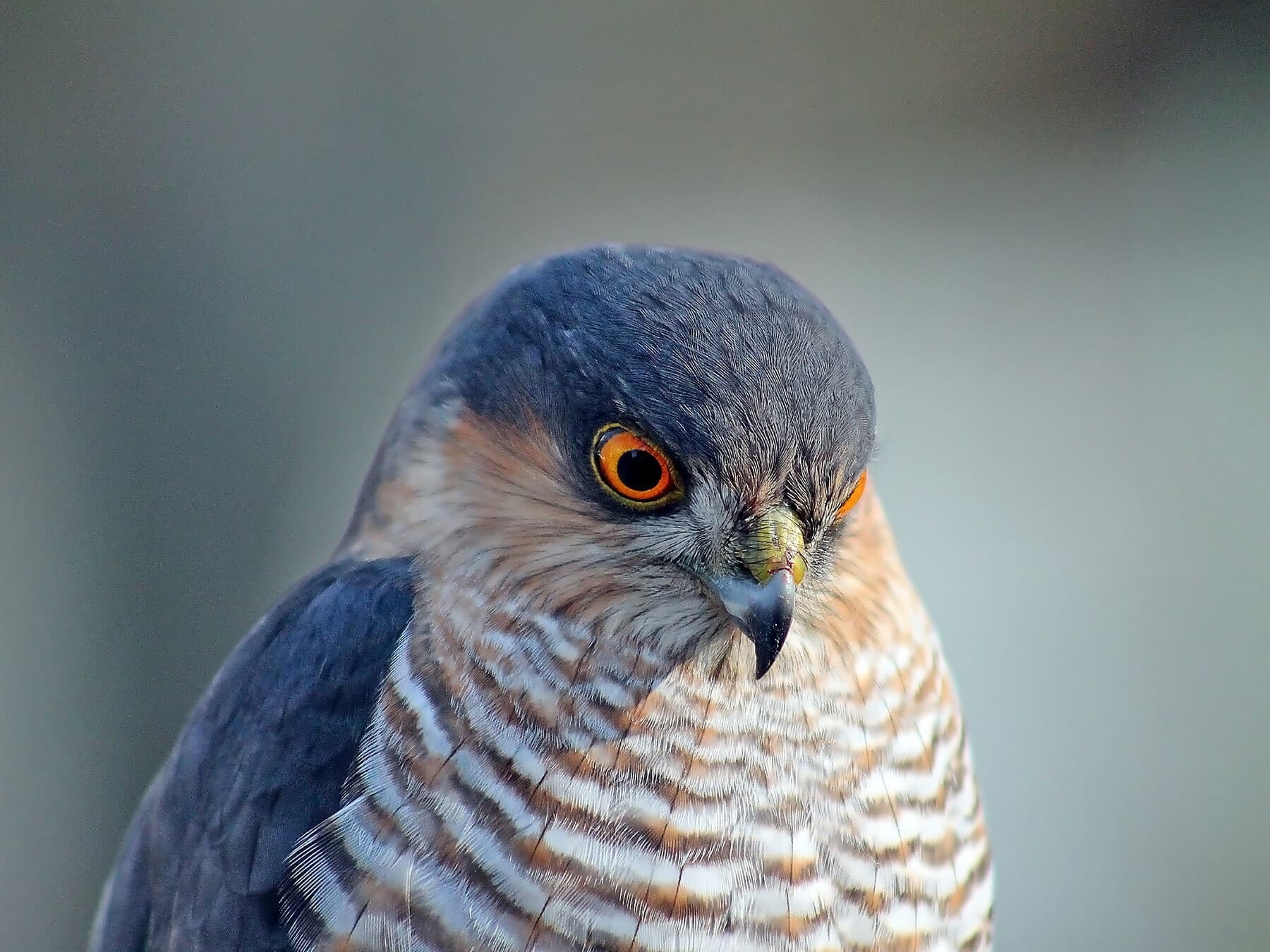
Common Ringed Plover. Known in Britain and Europe simply as the Ringed Plover, it is smaller, with one black band and no orange rump. A Killdeer looks like a larger, long-tailed Ringed Plover with two bands.
Not sure it’s a Killdeer? Check your photo: Birdfact names the bird and shows the look-alike side by side.
Its size
Adults- Length
- 20–28 cm
- Wingspan
- 59–63 cm
- Weight
- 75–128 g
Its song and calls
The Killdeer is named after its call: a loud, shrill kill-deer or kill-deee, often given again and again in flight. People have long noticed how noisy it is. Eighteenth-century naturalists called it the Chattering Plover and the Noisy Plover.2
Its display flights use the same kill-dee call, and its other calls form a scale that rises with its alarm. A thin dee note is a low-level alarm, often given near the nest; dee-dit-dit is sharper, and comes with a bob of the head. Nervous notes run into a trill, soft at first and louder as the alarm grows, which is also part of courtship. A string of kill-deer calls marks peak alarm, often as a bird ends its broken-wing act and flies off. In the breeding season, males fly high over their territory with slow, deep, floating wingbeats, calling kill-dee over and over.1
Calling at night
Killdeer call at any hour, and you will often hear one overhead in the dark, especially in early spring and late summer. Lit parking lots and ball fields draw them at night to call, mix with other Killdeer and feed on insects under the lights. They are quietest at midday and while sitting on eggs or tending small chicks, unless a predator comes close.
- Calls0:00 / 0:05
Recorded in Texas, United States · May 2022
- Alarm calls at a nest0:00 / 0:04
Recorded in California, United States · March 2026
Heard one and not sure? Let the bird song identifier listen.
When and where to see it
Killdeer breed from southeast Alaska and central Canada south through the United States to Mexico, with resident birds in the West Indies and a separate population from Ecuador to Peru and northern Chile. Look for them on open ground with short grass or none at all: lawns, golf courses, athletic fields, airports, pastures and plowed fields, parking lots, gravel roads and roofs, as well as sandbars, mudflats and shores. In one Missouri prairie study, the ground they used had vegetation mostly under half an inch (1 cm) tall.2 They are among the least water-bound of shorebirds, though there is usually some water nearby.
The best way to find one is to listen for the call, then scan the ground for a bird that runs a few steps, stops dead, bobs its head and runs on. In late summer, on migration and in winter, sod farms, golf courses, sewage lagoons and mudflats can hold hundreds.
Do they migrate?
Some do. Killdeer are partial migrants: northern birds move south for the winter, while southern ones stay all year, and some southern pairs keep their territory year-round. The dividing line is a broad zone around the latitude of Tennessee, and it shifts from year to year, probably with snow cover and frozen ground.
In winter they are found from about the southern half of the United States, and north along the coasts to British Columbia and Massachusetts, south to northwest South America; they leave snowy high ground. They are early spring migrants, back in some northern areas in February or March. Fall flocks gather from late June or July, and most northern birds leave between August and November, though some stay until hard weather forces them south. They migrate by day and by night in flocks of about 6 to 30. Birds banded in Indiana and Wisconsin have turned up in Louisiana and South Carolina, and a chick banded in Michigan was caught in Florida the next January.2
A few cross the Atlantic. The Killdeer is a rare, almost yearly vagrant to Britain, where the first was found in Dorset in 1859.3 Unlike most American shorebirds, it usually arrives in late fall and winter, often linked to strong storms.
Tips for seeing it
What it eats
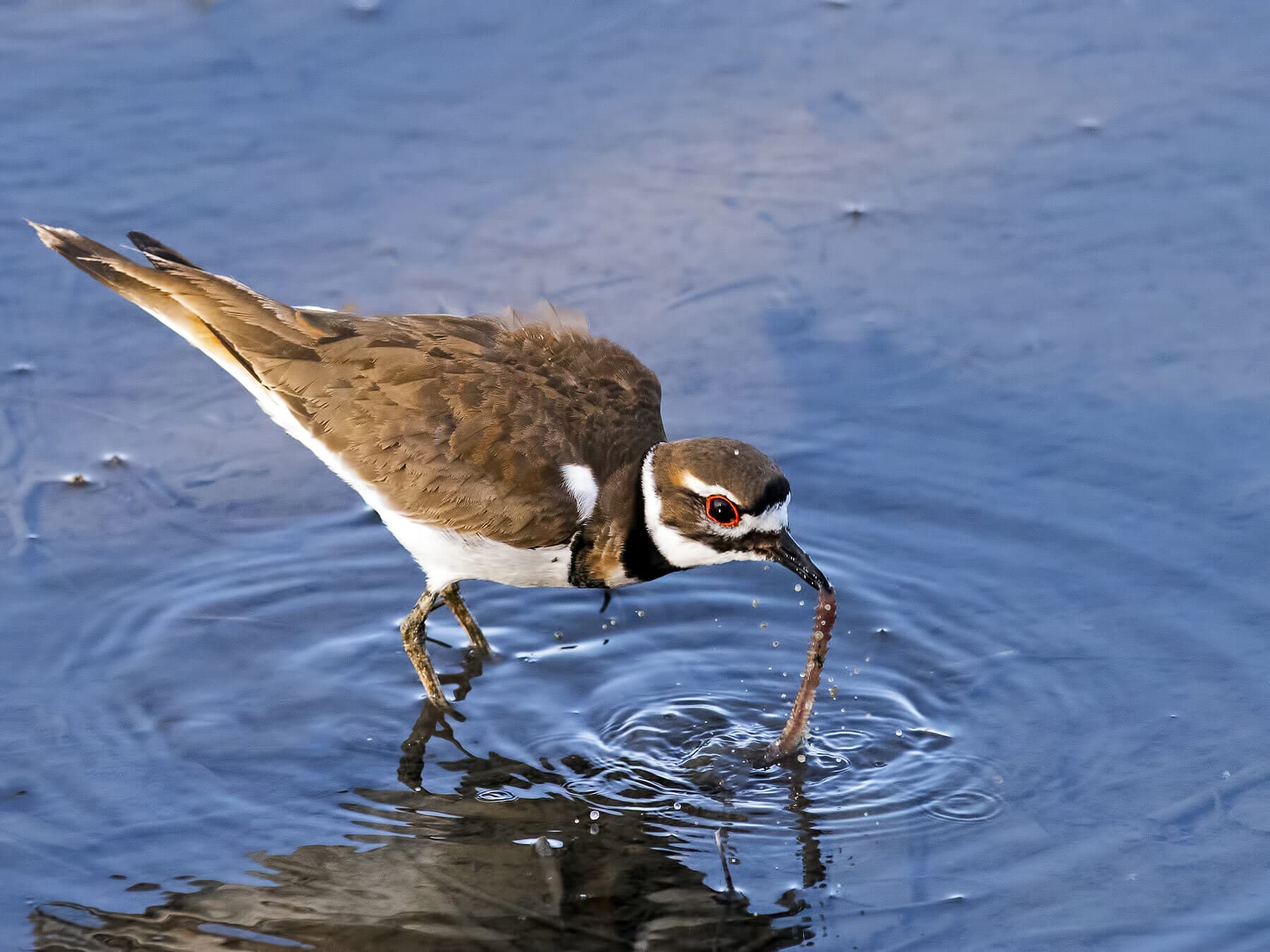
Killdeer eat mostly insects and other small animals taken from the ground: beetles, grasshoppers, fly and beetle larvae, caterpillars, earthworms, snails, crayfish and spiders, plus a few seeds. Early-1900s stomach studies found about 98% animal food. In one North Dakota study in summer, every one of more than 70 birds examined had eaten beetles, 4 to 19 apiece, and 63% had eaten grasshoppers.4
They are opportunists, too. Killdeer have been seen catching green tree frogs, shaking and washing them before swallowing, and eating dead minnows. In fall and winter they eat many sod webworms, lawn and grass pests; with other birds, they were found to control 80% of them on Oregon grass-seed fields.5
How they feed
A Killdeer hunts by sight. It runs, stops dead, looks, then runs on and grabs. It also probes mud, chases moving prey and pats the ground or the bottom of shallow water with one quivering foot, probably to stir up prey, and it follows farmers' plows for earthworms and grubs. It feeds at night as well as by day, for example on insects under parking-lot lights. It does not come to bird feeders, but it may feed on big lawns or grazed fields near homes.
Nesting and breeding
The nest is a shallow scrape on open ground, about 3 to 3.5 inches (8-9 cm) across, often on a slight rise. Killdeer nest on bare soil and short grass, and also on gravel road shoulders, parking lots, driveways and flat gravel roofs. Nesting starts earliest in the Deep South, in March; a month later across the middle of the country; in April or May in the northern states and southern Canada; and in June farther north. In the Caribbean they can nest year-round.
In the week or so before laying, a pair makes several scrapes in a scrape ceremony. One bird, usually the male, presses its breast down and kicks out a hollow; the other takes its place while the first stands over it with its tail raised and fanned, calling. The ceremony often ends in mating. Laying often starts in a near-empty scrape, and the nest is built up afterwards, mostly with light-colored pebbles, bits of shell and trash that the birds toss over their shoulders as they leave. In an experiment, Killdeer chose white sticks over black ones,6 and one Oklahoma nest had 1,552 pebbles in it after hatching.2

Eggs and incubation
The clutch is usually 4 eggs, rarely 5 or 6. They are buff to clay-colored, blotched with dark brown and black, about 1.5 by 1.1 inches (38 x 27 mm), and are laid one a day, usually in the morning. Both parents incubate, for about 25 days on average: 22 to 28 days in a Mississippi study,7 and most reports fall between 23 and 29. The male usually takes the night shift.
In hot weather a parent stands over the eggs to shade them. In the South it may soak its belly feathers in water and settle on the eggs to cool them.
Chicks and young
The chicks usually hatch within about 8 hours of each other, and the parents carry the shells away, up to 330 feet (100 m), often dropping them in water. Killdeer chicks are precocial: they hatch covered in down and active, and are up and walking away from the nest once their down has dried, usually within a day. They weigh about a third of an ounce (10 g).
The parents are not known to feed them (one 1979 report said otherwise). Instead they lead the chicks to feeding places, often near water, and the chicks feed themselves while the adults brood them, stand guard and lead them away from danger. The young fly at about 25 days, between 20 and 31 days in different studies, and stay with their parents and siblings until they can fly; in a Mississippi study marked chicks were seen regularly with their parents to 39 days old, and one at 81 days.

Nests on roofs and parking lots
Killdeer nest on flat gravel roofs across their range, which can go badly for the chicks. High parapets and screened drains can trap them, and trapped chicks die of heat, hunger and thirst. The parents call from below to get the chicks to jump: two chicks from one nest survived a jump from a seven-story building, but many chicks die from falls.2
Second nests and pairs
In the north, later nests are mostly replacements for failed ones; a second brood after a successful first is occasional. In warmer parts of the range two broods may be common, though in a Mississippi study pairs reared one brood or fewer a season. One Mississippi pair laid six clutches between mid-March and late July, and one pair had a new full clutch as soon as 8 days after losing one. Nests fail often: in a four-year Mississippi study, 38% of 101 nests hatched at least one egg,7 and most nest losses are to predators. Both sexes can breed at a year old.
Killdeer are socially monogamous. In the South some pairs stay together and on their territory all year, and in the Mississippi study some pairs stayed together for at least two to three and a half years. In Minnesota some birds had the same mate in later years,8 while other pairs last a season. Many return to the same breeding area year after year: in Mississippi five pairs nested within 16 feet (5 m) of the previous year's nest, and in a Minnesota study males returned more often than females. Most nests are new scrapes.
Behaviour
The Killdeer's best-known trick is the broken-wing display. A parent slips off the nest, and if a predator keeps coming it crouches, drags drooping wings, fans its orange tail and flutters along the ground as if hurt, calling, leading the predator away before it flies off. It works: in one study, predators were distracted from eggs and chicks in 1,012 of 1,017 approaches.9 The display works better against mammals than against birds hunting on the ground, and one red fox caught a displaying Killdeer. In Mississippi it was strongest late in incubation and just after hatching, and uncommon once the chicks were 10 days old; in the study above, males displayed closer to the predator than females.
Cows and horses do not hunt eggs, but they can step on them. For them a Killdeer does something different: it fluffs up, raises and fans its tail, spreads its wings and runs at the animal to turn it aside. It may also settle on an empty spot as if sitting on eggs; mammals tend to ignore this, though people can be fooled, and birds on the ground often come to look.

Everyday behavior
Killdeer run a few steps, stop, bob the head and run again, and when one spots an intruder its body bobs as if it had hiccupped. Adults swim well, even in fast water, and chicks can cross small streams by swimming. They often bathe after feeding and roost on the ground in the open. Pairs defend nesting territories; in Mississippi these averaged 1.7 acres (0.68 ha), but the birds fed well outside them. Outside the nesting season Killdeer usually gather in small, loose flocks, and the Killdeer has been described as a sentinel for mixed flocks of shorebirds.
Lifespan and predators
The standard handbook account, last revised in 2000, gives no study of how long a typical Killdeer lives, only the banding record. The oldest on the North American banding records lived to at least 10 years 11 months: it was banded as a chick in Kansas in July 1963 and caught again, alive, in Kansas in May 1974.10
Predators and dangers
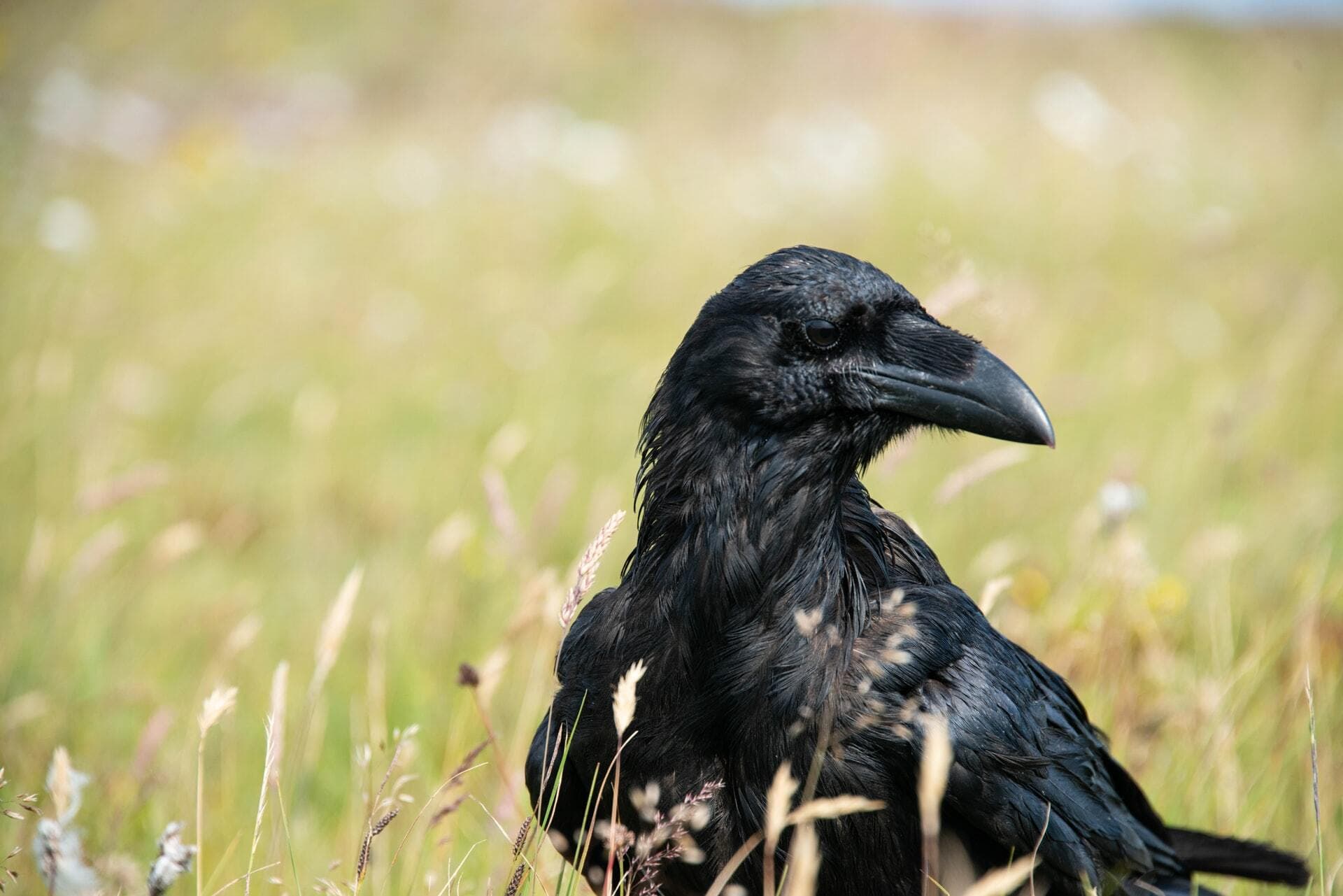
Eggs are taken by raccoons, opossums, weasels and their relatives, coyotes, dogs, snakes such as the gray rat snake, gulls, crows, ravens, magpies and Great Horned Owls. American Kestrels and Loggerhead Shrikes take chicks, and red foxes, Merlins, Red-tailed Hawks and Burrowing Owls take adults.
Living so close to people brings its own risks: cars, mowing, pesticides, and collisions with towers and tall buildings at night. Farm and turf pesticides have killed Killdeer: in one 1970s case, 175 were found dead after a field was sprayed with Azodrin.2 Severe cold kills some too, and birds have been found dead after hard freezes in Florida and Louisiana.
Conservation
The Killdeer is still common and widespread, with about 2.3 million adult birds worldwide,11 but it is declining. In 2024 it was listed as Near Threatened on the IUCN Red List, because surveys across most of its range show a fall of more than 20% over three generations, about 13 years. The causes of the decline are uncertain.12
The North American Breeding Bird Survey shows a decline of about 0.6% a year from 1966 to 2025, about 29% overall. The fall is steepest in Canada, about 2% a year. Over the whole period it is slight in the United States, though the US index fell about a fifth between 2010 and 2025, and not everywhere is falling: numbers rose significantly in some states, including Illinois, Iowa, Indiana, Ohio and North Carolina. The survey-wide index has leveled off since a low in 2022.13 Partners in Flight, working from the same survey, puts the fall from 1970 to 2021 at about 40%.
It has had a turbulent history with people. It was once sold in markets and shot by sportsmen, and numbers fell sharply on the Atlantic coast in the late 1890s and early 1900s; protection followed, and it has not been legal game since the early 1900s. Clearing of forests probably increased its numbers, and later lawns, golf courses, fields and gravel let it spread. Writing in 2000, the authors of its standard handbook account judged it probably more common than ever before, and one of the most successful shorebirds in places people have changed.2
Conservation and the law
In the United States the Killdeer is protected by the federal Migratory Bird Treaty Act: it is illegal to take, kill or keep a Killdeer, or to take, move or keep its eggs or nest, except as federal regulations allow.14
If a Killdeer nests in your driveway or yard, leave the nest where it is and mark it off, so that cars, mowers and feet go around it. It is usually empty within about four weeks of the last egg, because the chicks walk away within a day of hatching.
Similar birds
Often mistaken for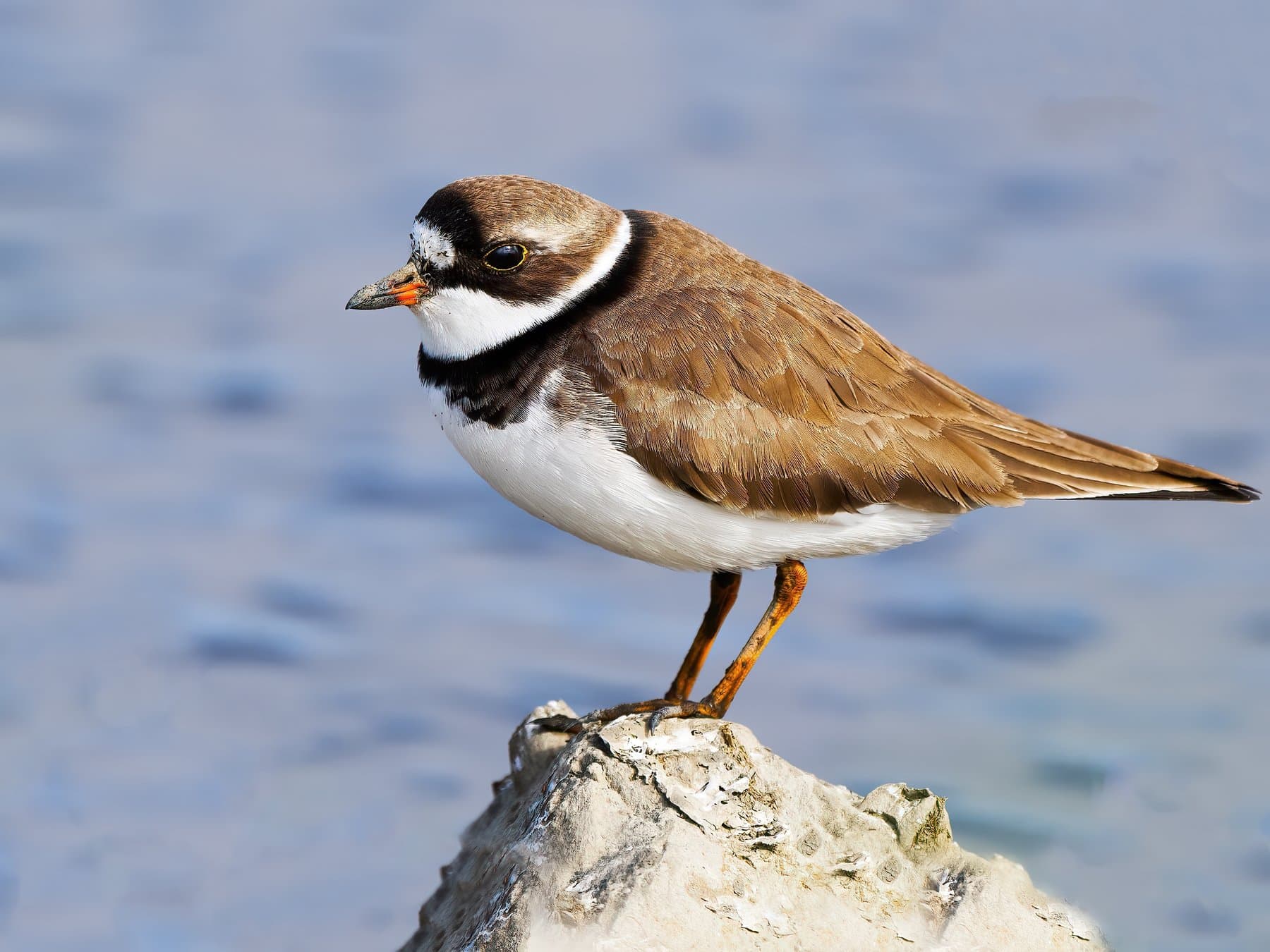


Killdeer guides
2 guidesQuick facts
- Length
- 20–28 cm
- Wingspan
- 59–63 cm
- Weight
- 75–128 g
- Lifespan
- oldest recorded 10 years 11 months
- Family
- Plovers & Lapwings
- Migration
- Partial migrant
- Global status (IUCN)
- Near Threatened
- World population
- About 2.3 million adult birds worldwide (Partners in Flight, 2023)
- Population trend
- Still common and widespread, but declining over much of its range, most steeply in Canada
- Scientific name
- Charadrius vociferus
Questions
5Why is it called a Killdeer?
After its call, a loud, shrill kill-deer that it gives again and again, often in flight. It has nothing to do with deer. See calls.
Is the Killdeer endangered?
No, but it is Near Threatened: still common, with about 2.3 million adult birds, but declining over much of its range. See conservation status.
Do Killdeer feed their chicks?
Not as far as is known. The chicks feed themselves from the day they leave the nest; the parents lead them to food, guard them and keep them warm. See nesting.
Has a Killdeer been seen in Britain?
Yes, as a rare vagrant from North America, recorded almost every year, mostly in late fall and winter, often linked to strong storms. The first British record was in Dorset in 1859.
Can I move a Killdeer nest?
No. It is protected by federal law, and moving the eggs or nest is not allowed without federal authorization. Leave it where it is and mark it off; it is usually empty within about four weeks of the last egg. See the law.
Sources
25- 1National Audubon Society. Killdeer. Guide to North American Birds. Accessed 2 November 2026. Source (opens in a new tab)
- 2Jackson, B. J. and Jackson, J. A. (2020). Killdeer (Charadrius vociferus), version 1.0. Birds of the World (A. F. Poole and F. B. Gill, editors). Cornell Lab of Ornithology. doi:10.2173/bow.killde.01 (opens in a new tab)
- 3British Trust for Ornithology. Killdeer. BTO BirdFacts. Accessed 2 November 2026. Source (opens in a new tab)
- 4Fair, J. M., Kennedy, P. L. and McEwen, L. C. (1995). Effects of carbaryl grasshopper control on nesting Killdeer in North Dakota. Environmental Toxicology and Chemistry 14: 881-890. Accessed 2 November 2026.
- 5Kamm, J. A. (1973). Biotic factors that affect sod webworms in grass seed fields in Oregon. Environmental Entomology 2: 94-96. Accessed 2 November 2026.
- 6Kull, R. C., Jr. (1977). Color selection of nesting material by Killdeer. Auk 94: 602-604. Accessed 2 November 2026.
- 7Schardien, B. J. (1981). Behavioral ecology of a southern population of Killdeer. Ph.D. thesis, Mississippi State University. Accessed 2 November 2026.
- 8Lenington, S. and Mace, T. (1975). Mate fidelity and nesting site tenacity in the Killdeer. Auk 92: 149-151. Accessed 2 November 2026.
- 9Brunton, D. H. (1990). The effects of nesting stage, sex, and type of predator on parental defense by Killdeer (Charadrius vociferus): testing models of avian parental defense. Behavioral Ecology and Sociobiology 26: 181-190. Accessed 2 November 2026.
- 10USGS Bird Banding Laboratory. Longevity records of North American birds. USGS Eastern Ecological Science Center, Bird Banding Laboratory. Accessed 2 November 2026. Source (opens in a new tab)
- 11Partners in Flight (2023). Avian Conservation Assessment Database and Population Estimates Database. Bird Conservancy of the Rockies. Accessed 2 November 2026. Source (opens in a new tab)
- 12BirdLife International (2024). Species factsheet: Killdeer Charadrius vociferus. BirdLife DataZone. Accessed 2 November 2026. Source (opens in a new tab)
- 13Hostetler, J. A. et al. (2026). The North American Breeding Bird Survey, Analysis Results 1966-2025. U.S. Geological Survey data release. doi:10.5066/P1OSNSFC (opens in a new tab)
- 14United States Code. 16 U.S.C. 703: Taking, killing, or possessing migratory birds unlawful. Legal Information Institute, Cornell Law School. Accessed 2 November 2026. Source (opens in a new tab)
- 15Cornell Lab of Ornithology. Killdeer. All About Birds. Accessed 2 November 2026. Source (opens in a new tab)
- 16National Audubon Society. Semipalmated Plover. Guide to North American Birds. Accessed 2 November 2026. Source (opens in a new tab)
- 17National Audubon Society. Piping Plover. Guide to North American Birds. Accessed 2 November 2026. Source (opens in a new tab)
- 18National Audubon Society. Wilson's Plover. Guide to North American Birds. Accessed 2 November 2026. Source (opens in a new tab)
- 19Schardien, B. J. and Jackson, J. A. (1979). Belly-soaking as a thermoregulatory mechanism in nesting Killdeers. Auk 96: 604-606. Accessed 2 November 2026.
- 20Brunton, D. H. (1986). Fatal antipredator behavior of a Killdeer. Wilson Bulletin 98: 605-606. Accessed 2 November 2026.
- 21Clapp, R. B., Klimkiewicz, M. K. and Kennard, J. H. (1982). Longevity records of North American birds: Gaviidae through Alcidae. Journal of Field Ornithology 53(2): 81-208. Accessed 2 November 2026.
- 22U.S. Fish and Wildlife Service (2026). 50 CFR 10.13: List of Birds Protected by the Migratory Bird Treaty Act. Electronic Code of Federal Regulations. Accessed 2 November 2026. Source (opens in a new tab)
- 23Bunni, M. K. (1959). The Killdeer, Charadrius v. vociferus, in the breeding season: ecology, behavior, and the development of homoiothermism. Ph.D. thesis, University of Michigan. Accessed 2 November 2026.
- 24Kantrud, H. A. and Higgins, K. F. (1992). Nest and nest site characteristics of some ground-nesting, non-passerine birds of northern grasslands. Prairie Naturalist 24: 67-84. Accessed 2 November 2026.
- 25AviList Core Team (2025). AviList: The Global Avian Checklist, v2025. data/reference/avilist.csv. Accessed 2 November 2026. Source (opens in a new tab)

Checked by
Nathan Cope, founder and editor
Nathan founded Birdfact and leads its writers and contributors in the UK, the US and Canada. He has watched and studied birds for more than ten years, and checks every article and species guide before it’s published.